

Vacuum Pump for Filament Storage


Vacuum Pump for Filament Storage
- Made to order — 3D printed after you buy
- Free shipping on orders over $25
- Quality checked before it ships
- Questions? Contact us · Returns
Recently, I upgraded all my filament storage bags to use vacuum storage. I bought an electric pump to go with them. While it did work, it pumped air out of the bags very slowly and was not very ergonomic. Despite the multitude of pumps available on the market, I must have picked the wrong one from the get-go. Moreover, I broke it on the first day while repacking all my spools. However, I remembered that I had some excellent and quite efficient Parker pumps left over from a PNP SMD installer project. Considering their high performance, these pumps turned out to be perfect for filament storage.
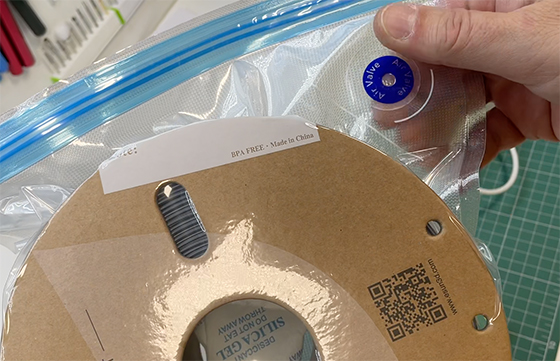
For those who might not know: most filaments are hygroscopic, meaning they absorb moisture from the air. This can lead to issues during printing, such as boiling plastic, which might make you think there’s something wrong with your printer. But that's a side note. Let's get back to the pump.
Key Aspects of the Pump Design
Main Features
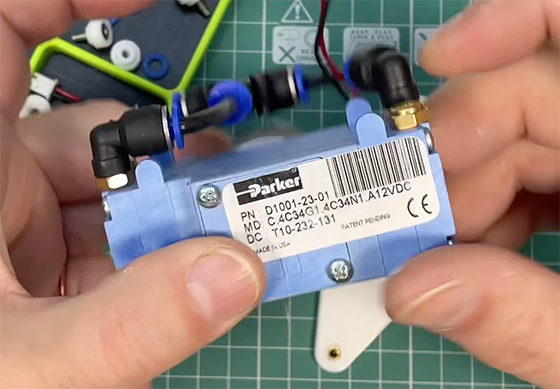
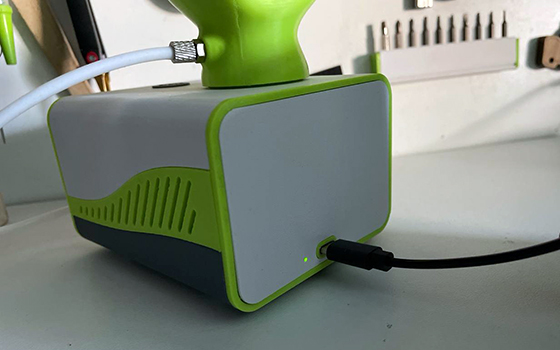
This pump is based on a brushless motor with two independent membrane heads. These heads can operate individually, in parallel, or in series. Parallel connection increases air flow, while series connection boosts vacuum power. If you switch the inputs and outputs, you can simply use it as a pump.
Performance
The pump’s performance is quite decent for our needs, quickly evacuating air from the storage bags. For the skeptics: yes, you could use a vacuum cleaner instead, but let’s not go there.
Modifications
- Barbs and Fittings: The pump originally came with standard barbs, which I removed. I drilled holes, tapped them to M5 thread, and installed quick-disconnect pneumatic fittings.
- Mufflers: I added mufflers to the pump outlets, considerably reducing noise.
- Power Consumption: The pump operates on just 250 mAh at 12V. I decided to use a battery with a boost converter module, and the charge lasts quite long.
- Control: The pump is turned on with a TTP223 touch sensor module, which has multiple operating modes depending on the jumpers used. You'll also need a small N-MOSFET and a couple of resistors 10k and 0,1k.
Charging Module
I use a LiPo battery charging module that I designed and manufactured myself. Although it’s not commercially available, there are alternatives you can use. Links to these are provided in the general parts list.
Printing Parts
Some parts require supports. I created highly detailed supports with minimal offsets. Pre-configured files for BambuLab and Creality K1 printers are included , but they can be adjusted for other printers.
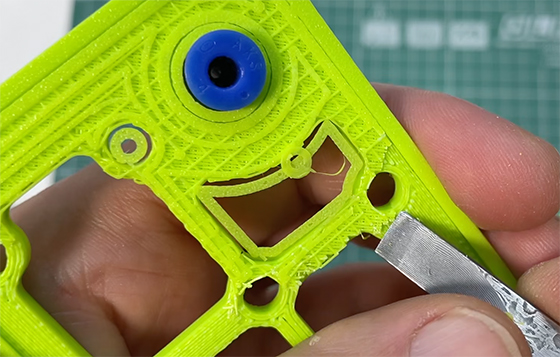
I used eSUN ABS+HS plastic for its ease of use and matte finish. The pump damper is made from the same manufacturer’s TPU. The feet are also made from soft plastic, and silicone rings are used between the casing and damper to further reduce vibrations and noise.
Housing Assembly
The housing consists of a frame and a false panel that hides all the fasteners. This design ensures simplicity in assembly and a clean look without any visible screws. My inspiration came from L E G O constructions, which enable easy-to-assemble and robust housings.
Vacuum Suction Cup
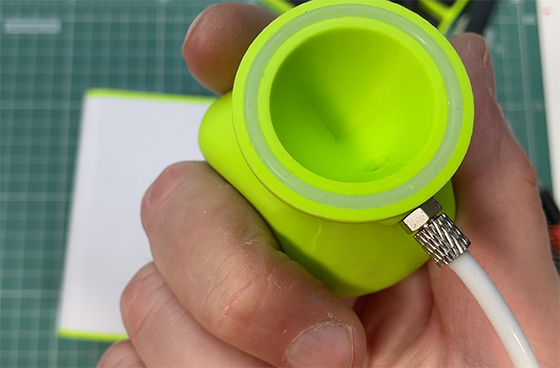
I paid special attention to the vacuum suction cup design, as the store-bought pump was quite inconvenient to use. The new suction cup mimics the shape of the hand, making it much more comfortable to use. It's designed for right-handers, but if you're left-handed, you can mirror the model in the slicer. The suction is sealed with a silicone ring, 2.5mm thick with an inner diameter of 32mm.
Conclusion
Compared to available market options, the cost of components for my vacuum pump might seem high. However, since all the components were already on hand, I decided to create this device. The quality of the pump’s operation is significantly higher than anything I’ve seen on the market. Creating a high-quality, reliable device with the materials you have will make your filament storage experience much more enjoyable and efficient.
I hope this project proves useful for you. Good luck with your endeavors!
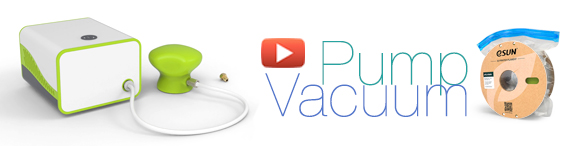
See the video for details:
If you liked this thing - let me know by putting like!
Parts links below:
- Vacuum Sealing Bags
- eSUN Vacuum Series
- Parker DC12V D1001-23-01 Brushless Vacuum Dual Head Air Pump
- Fitting PE D4mm
- Fitting PM D4mm
- Fitting PL M5 D4mm
- Pneumatic plug silencer M5
- Fitting Fast Twist Joint OD Hose 4mm M5
- Silicone Tube
- Silicone O Ring Gasket OD35xCS2.5
- O-Ring 9x4x2.5mm
- Touch button Module TTP223
- MT3608 2A DC-DC Step Up Converter
- Mosfet IRLML2803
- Resistors
- LiPo Battery 785075 3830mAh
- Flexible Silicone Wire 26 AWG
- Cross Phillips Ultra Thin Super Low Flat Head Screw M2.5
- Head Flat Screw M3 M4
- Inserts Nut 2.5
- Insert Knurled Nuts M3
- UV Glue
- Type-C Connector Female Socket
- Type-c 5V 1A Lithium-ion Battery Charger
- Crystal Fishing Wire
- eSUN eABS+HS
- PET Double Sided Adhesive Tape
- Foam Adhesive Tape
Links to used tools:
- MINI MScraper
- TE01 TC01 MINI MTweezers
- NOGA deburring tool and Blades
- Polishing Cordless Drill
- Machine Screw Tap Set
- Carbide Machine Reamer
- UV Glue Repair Lamp
- Heat Insert Nut Iron Tip
My favorites:
Thank you for every tip or donation,
it means great recognition for me and helps a lot to keep going!

BTC:bc1qplpzq36ghw84hty4nn2zzu4ps4sdh4th0v93j8
ETH:0xc766ebbeAa76aaf629788c8F99C33A8d80d48977
My some other things:

Design by Valera Perinski on MakerWorld (license: CC0).